.png)
How I Fell in Love with Hanoi – A Family Travel Guide | Things to Do, Accommodation & Tips
- 3 days ago
- 8 min read
Hanoi was one of the biggest surprises of our trip and captured my heart from the very first moment. It’s a capital city that has managed to preserve the old soul of Vietnam while remaining vibrant, colorful, and full of energy. The streets of the Old Quarter feel like a window into local life—narrow alleys packed with food stalls, tiny cafés, family-run shops, and an almost magical blend of organized chaos and rich cultural heritage.
During our days there, we discovered some of the best food in Vietnam, lively streets that never seem to sleep, green parks, and historical landmarks that tell the story of the country. Hanoi feels authentic, alive, and full of character—a city whose memories stay with you long after you leave.
We visited Hanoi as part of a longer journey through Vietnam with our three-and-a-half-year-old son, Dan, and our ten-month-old daughter, Lee. In this guide, I’m excited to share everything you need to know about Hanoi: where to stay, what not to miss, which local dishes to try, unique experiences, and practical tips to help make your visit to the city one of the highlights of your trip.

When to Visit Hanoi
Located in northern Vietnam, Hanoi has a subtropical climate with relatively cool winters and hot, humid summers. Unlike destinations in central Vietnam, the seasons here are much more noticeable and can significantly influence your experience in the city.
The best time to visit Hanoi is from October to December and again during March and April, when the weather is pleasant, temperatures are moderate, and rainfall is generally lower. Keep in mind that these are also the city's busiest travel seasons, so you can expect larger crowds and higher accommodation prices.

January and February are noticeably cooler, with many days feeling gray, misty, and overcast. From May to August, Hanoi enters its hot and humid summer season, bringing high temperatures, intense humidity, and short but heavy monsoon downpours. The upside of visiting during these months is that the city is much less crowded with tourists.
We visited Hanoi at the end of September and were fortunate to enjoy perfect weather, though it was truly a matter of luck. During our trip, while we were already exploring other parts of Vietnam, Hanoi was hit by strong typhoons and severe flooding. Weather conditions during this period can be quite unpredictable, so it’s best to travel with a flexible mindset and leave room for spontaneous changes to your plans if needed.


Getting to Hanoi
The easiest and most convenient way to reach Hanoi is by flying into Noi Bai International Airport (HAN), one of Vietnam’s largest and busiest airports. It is well connected with frequent domestic flights from cities such as Ho Chi Minh City, Da Nang, and Phu Quoc, as well as numerous international routes from destinations across Asia and Europe.
Once you arrive, getting to the city center is straightforward. Noi Bai Airport is located about 40 minutes from the Old Quarter, depending on traffic. The most convenient option is to arrange a transfer through your hotel or book a ride using apps such as Grab, which is typically the fastest, easiest, and most affordable way to begin your stay in Hanoi. If you are arriving during peak traffic hours, it’s worth allowing some extra time for the journey into the city.


Getting Around Hanoi
Like elsewhere in Vietnam, the easiest way to get around Hanoi is by using Grab, the local ride-hailing app that offers affordable and convenient taxi and motorbike rides throughout the city. It’s a reliable option for reaching almost any destination quickly and at a low cost.
That said, Hanoi is a large and busy city. The Old Quarter is almost always bustling with activity, with heavy traffic, crowded streets, and an endless stream of motorbikes weaving through the roads.
My main recommendation is to explore as much as possible on foot. While Hanoi is not a compact city where everything is within walking distance, staying in a central area allows you to reach many of the city's highlights by simply wandering through its streets. We found Hanoi to be pleasant and safe to walk around at all hours of the day, so whenever walking was an option, it was always our first choice.

Where to Stay in Hanoi
The best area to stay in Hanoi is the Old Quarter, particularly the streets surrounding Hoan Kiem Lake. This is the vibrant heart of the city, filled with restaurants, cafés, markets, and an energy that seems to never fade.
One thing worth keeping in mind is that hotel ratings in Vietnam—and especially in Hanoi—do not always reflect the standard you might expect. A five-star hotel with an 8.5 rating on Booking.com does not necessarily guarantee the same level of quality you would associate with a similar rating in Europe. It’s worth taking the time to carefully review recent guest feedback, photos, and the list of amenities before booking.
During our stay in Hanoi, we tried three different hotels, and by far my favorite was Peridot Grand Luxury Boutique Hotel. Its location is excellent—very central and within easy walking distance of Hoan Kiem Lake, the night market, and some of the most charming streets in the Old Quarter.
The hotel features a stunning rooftop pool with panoramic city views, beautifully designed rooms, and a breakfast spread that was genuinely one of the best we had anywhere in Vietnam. We only stayed there for one night and, unfortunately, couldn’t extend our stay because the hotel was fully booked. It was easily one of the accommodations we enjoyed most throughout the entire trip.

Things to Do in Hanoi
Hanoi is one of the most fascinating and distinctive cities in Vietnam. Visiting it feels like stepping into the beating heart of the country. The city blends deep history, rich culture, some of the best street food in the world, and an atmosphere unlike anywhere else. We spent a total of four days in Hanoi, which felt like the perfect amount of time to truly experience the city—wandering through its maze of streets on foot, sampling food from every stall that caught our eye, visiting temples, and watching the city come to life each morning in its own unique way.

Located just north of Hoan Kiem Lake, Hanoi’s Old Quarter is the historic and vibrant heart of the city. It’s a lively maze of narrow streets filled with food stalls, family-run shops, and tiny cafés tucked around every corner.
This is where you’ll experience Hanoi at its most authentic: hundreds of motorbikes weaving through the streets, the aroma of pho and banh mi drifting through the air, and centuries-old buildings that tell the story of the city’s rich past.
The Old Quarter is the best place to simply wander without a plan. Stroll through its bustling alleyways, soak up the atmosphere, and discover Hanoi’s unique charm up close. Every street seems to have its own personality, making it one of the most enjoyable areas in the city to explore on foot.


Trấn Quốc Pagoda is one of the oldest and most impressive pagodas in Hanoi. Dating back more than 1,400 years, this historic Buddhist site features beautiful traditional architecture, peaceful gardens, and a striking red pagoda tower that can be seen from afar.
Set on a small island along the shores of West Lake, the pagoda offers a welcome escape from the city's constant buzz. Its tranquil atmosphere provides a glimpse into Vietnam’s Buddhist heritage and showcases some of the country's finest traditional architecture.
Whether you visit for its cultural significance, spiritual atmosphere, or picturesque setting, Trấn Quốc Pagoda is well worth adding to your Hanoi itinerary. As opening hours can occasionally vary, it's a good idea to check the latest information on Google before your visit.


We chose to spend one of Hanoi’s gray, overcast days at Hanoi Zoo, a large park that combines a traditional zoo with amusement rides and recreational areas.
The zoo itself is pleasant and not particularly large, but it can be a fun outing for families traveling with young children. Dan especially enjoyed the amusement rides, although it’s worth noting that they are not included in the entrance fee and require separate tickets.
While Hanoi Zoo is not a must-see attraction, it can be a good option for a rainy day, a break from sightseeing, or simply when the kids need some time to play and unwind away from the busy city streets.


Train Street is perhaps one of Hanoi’s most famous attractions—a narrow alley where an active railway track runs directly between homes, tiny cafés, and local balconies.
Whenever the train approaches, everything comes to a halt. Residents quickly move tables and chairs, visitors step back against the walls, and for a few moments the entire street transforms into a thrilling spectacle. It’s truly one of the most unique experiences in Hanoi. Until you see the train pass just a few feet away, it’s hard to appreciate how large, powerful, and incredibly close it feels.
The train runs on a regular schedule, which can easily be confirmed through your hotel or a local café on the street. I recommend arriving about 30 minutes before the scheduled passing time, finding a seat at one of the cafés, ordering a drink, and settling in to enjoy the atmosphere while securing a great spot for this unforgettable moment.


Thê Húc Bridge is one of Hanoi’s most iconic landmarks. This elegant wooden bridge, painted in a striking shade of red, leads directly to Ngoc Son Temple, which sits on a small island in the middle of Hoan Kiem Lake.
Its name translates to “The Morning Sunlight Bridge,” and it is especially beautiful at sunrise, when the soft light and reflections on the water create a truly picturesque scene. The bridge’s vibrant color and graceful design have made it one of the most photographed spots in Hanoi.
A quick stroll across Thê Húc Bridge is a must when exploring the lake area, whether you're visiting Ngoc Son Temple or simply taking in the charm and atmosphere of the city’s most famous waterfront.
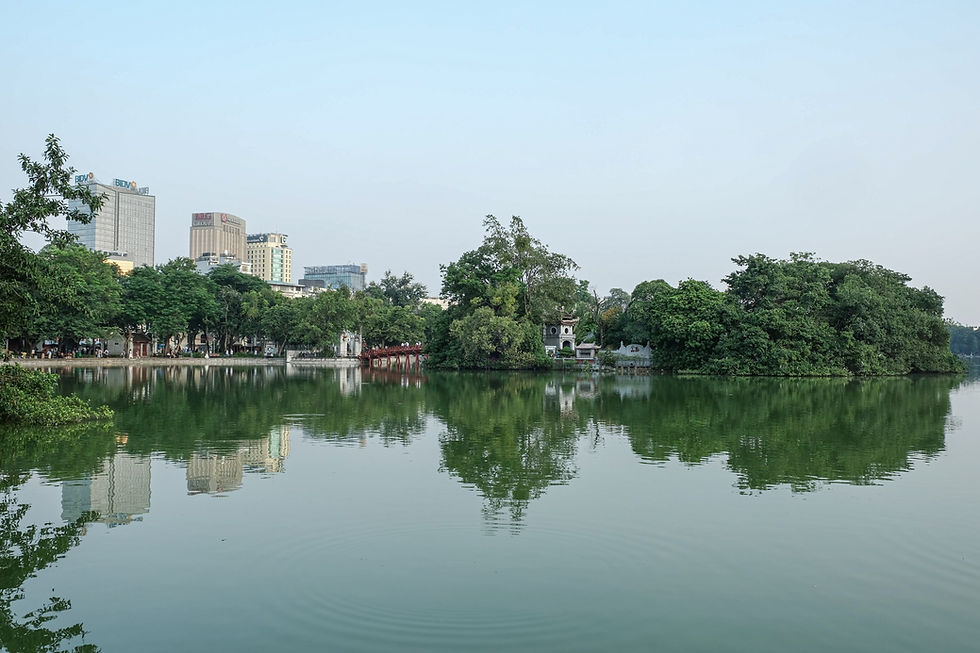
Ngoc Son Temple is situated on a small island in the middle of Hoan Kiem Lake and is considered one of Hanoi’s most beautiful and recognizable landmarks. Reached via the iconic Thê Húc Bridge, the temple is dedicated to several historical figures and symbolizes Vietnam’s national spirit and cultural heritage.
Surrounded by the peaceful waters of the lake, the temple offers a calm and atmospheric escape from the city's busy streets. Its traditional architecture, scenic setting, and cultural significance make it a worthwhile stop while exploring the area around Hoan Kiem Lake.
Even if you only visit briefly, it’s a wonderful spot to soak in the atmosphere, admire the views across the lake, and capture some of Hanoi’s most picturesque photo opportunities. Admission is free.


Ta Hien Street, often referred to as Beer Street, is the liveliest street in Hanoi’s Old Quarter and the heart of the city’s nightlife scene. As evening falls, the street comes alive with small bars, live music, bustling crowds, and the famous low plastic stools that spill out onto the sidewalks.
It’s the perfect place to grab a cold beer, soak up the atmosphere, and get a taste of Hanoi’s energetic local nightlife. Whether you're people-watching, enjoying street food, or simply taking in the vibrant surroundings, Ta Hien offers a fun and memorable evening experience.
The street is especially busy on weekends, with Saturday nights being the most crowded and energetic, when both locals and visitors gather to enjoy the lively atmosphere well into the night.

Conclusion
There’s something about Hanoi’s endless energy that makes it impossible not to fall in love with the city. It has the kind of atmosphere that makes you feel you could stay for weeks without ever getting bored. We started our Vietnam journey here, and by the very first day, I already knew I wanted to return before the trip was over.
Perhaps it’s the constant flow of life—the buzzing streets, the aromas drifting from every corner, the vibrant street scenes, and the crowds that fill the city at every hour of the day. Or maybe it’s the authenticity that Hanoi has managed to preserve despite welcoming millions of visitors each year.
Whatever the reason, Hanoi is a city that leaves a lasting impression. It’s lively, fascinating, and full of character—a place that stays with you long after you’ve moved on to your next destination.




Comments